
Fire evacuation signs are one of the most visible and consequential elements of any building’s safety infrastructure. Whether in a busy office, a retail unit, or an industrial workshop, the right signage can mean the difference between an orderly evacuation and dangerous confusion. Understanding how to inspect, maintain, and replace these signs is not merely good practice, it is a legal and moral responsibility for anyone managing a workplace.
Key takeaways
- Fire evacuation signs are essential safety tools that provide critical visual guidance to occupants during emergencies, especially in conditions of low visibility.
- A comprehensive fire safety system must include a variety of signs, such as directional indicators, assembly point markers, extinguisher identification, and fire action notices.
- Employers have a legal and moral obligation to ensure signs are correctly installed, clearly recognizable, and compliant with relevant safety regulations and building standards.
- Routine inspections are necessary to ensure that signs remain legible, undamaged, and unobstructed by furniture or equipment throughout the building.
- Emergency signage must be immediately updated whenever the layout of a building changes to ensure that directional cues accurately reflect current escape routes.
- Photoluminescent signs and illuminated displays should be regularly tested to ensure they function properly during power failures or in low-light conditions.
- Proactive replacement of worn or degraded signs and periodic professional audits are vital for maintaining long-term safety compliance and operational reliability.
Why fire evacuation signs are central to building safety
The Role of Clear Signage in Guiding Occupants During an Emergency
When an emergency strikes, people rely on instinct and visual cues. Emergency evacuation signage provides those cues instantly, guiding occupants along escape routes even under conditions of stress, reduced visibility, or unfamiliarity with the building. Green fire exit directional signs are particularly critical, as they identify exits and direct individuals through corridors and stairwells that may not be immediately obvious. In situations such as a power failure or structural incident, clearly placed directional signs become the primary means by which people find their way to safety.
Beyond exit signs, a comprehensive fire safety signs system encompasses several distinct categories. Assembly point signage ensures that once people have evacuated, they gather at agreed locations so that headcounts can be carried out efficiently. Fire extinguisher identification signs indicate both the location and the appropriate type of extinguisher for different classes of fire. Fire door safety signage communicates how fire doors must be used to limit the spread of flames and smoke, while prohibition signage (such as no-smoking notices) addresses specific hazards relevant to a given area. Fire action notices round out the picture by informing occupants of the precise steps they should take the moment a fire is detected.
Photoluminescent fire signs are especially valuable in low-light conditions, absorbing ambient light and remaining visible when the power goes out. It is worth noting, however, that such signs work most effectively when supported by adequate emergency lighting throughout the premises.

Legal and safety obligations surrounding fire evacuation signage
In the UK, workplace fire exit signs and broader fire safety compliance are governed by a framework that includes health and safety legislation, UK building regulation standards, and the British Standard BS 5499. Employers are legally obliged to provide signs that actively help prevent risk, and those signs must be installed correctly and remain easily recognisable to all occupants. Emergency exit visibility must be maintained at all times (including during power outages) which is why photoluminescent fire signs and emergency lighting are so often deployed together.
The specific signage requirements for any given premises depend on the nature of the business and the size of the building. Larger properties with multiple rooms, floors, and access points naturally require a greater number and variety of signs to cover every relevant zone. A thorough fire risk assessment should inform the entire signage strategy, ensuring that mandatory safety signs, directional indicators, and prohibition notices are all placed where they will be most effective. Signage must never be treated in isolation, it forms part of a wider system that includes alarms, extinguishers, and staff training.
Keeping fire evacuation signs in reliable condition
Routine Inspection and Maintenance Checks to Carry Out Regularly
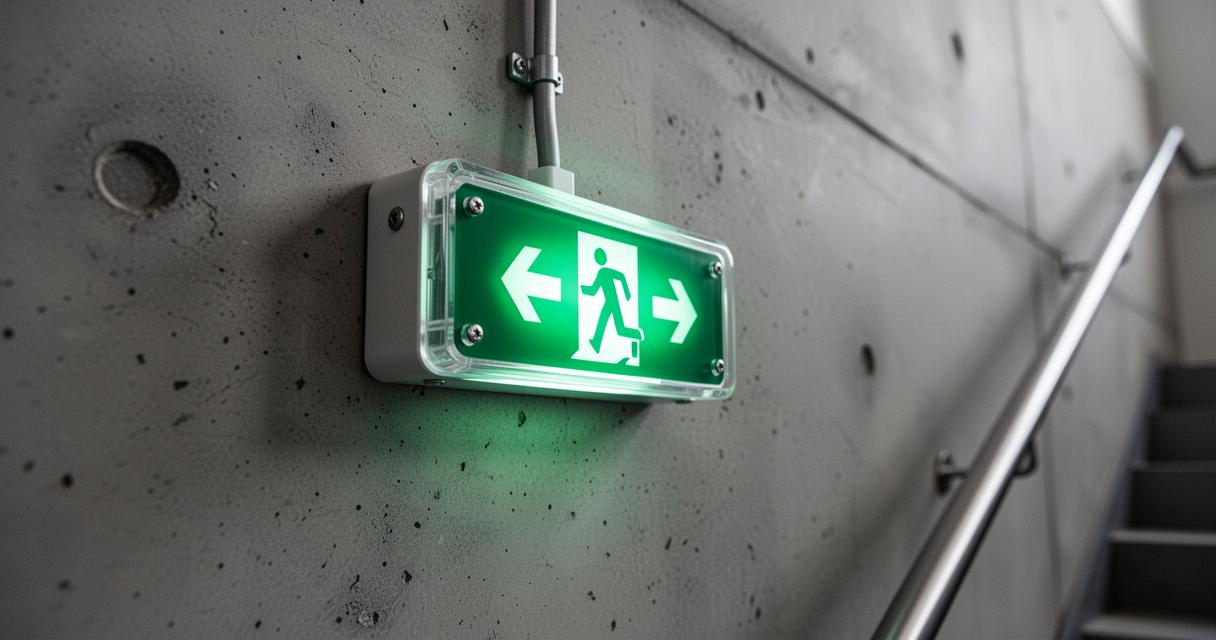
Even the most carefully chosen signs will lose their effectiveness if they are not properly maintained. Routine inspections of workplace safety signage should verify that every sign remains clearly legible, undamaged, and correctly positioned. Signs that have faded, cracked, or become obscured by furniture, equipment, or paintwork must be addressed without delay. For illuminated signs, it is essential to confirm that lighting elements are fully functional and that no bulbs or LED units have failed. Safety sign maintenance should be scheduled regularly and documented as part of the broader fire safety management record.
Particular attention should be paid to emergency escape routes: any sign along an evacuation path that is unclear or misleading could slow an evacuation at the worst possible moment. Directional signs must always correspond to the actual layout of the building, if a route has been altered or a door relocated, the signage must be updated immediately to reflect the change. Fire safety practices, including signage checks, should be reviewed and updated following any modifications to the workplace layout or equipment.

Knowing when to replace fire evacuation signs before they fail
Replacement is not merely a reactive measure, it should be anticipated as part of a proactive fire safety compliance strategy. Signs that show visible wear, discolouration, or physical damage should be replaced before they become non-compliant. Photoluminescent fire signs have a finite capacity to retain and emit light, and their performance can diminish over time, particularly if they have been exposed to direct sunlight or harsh environmental conditions. Where a premises undergoes significant change (such as a refurbishment, a change of use, or the introduction of new fire prevention equipment) a full signage audit is advisable to confirm that every sign still meets current health and safety regulations and building regulation standards.
Professional signage audits can provide a structured assessment of what is in place, what needs updating, and where gaps exist. This is particularly valuable for large or complex premises where the sheer volume of fire safety signs makes it difficult for in-house teams to maintain a complete overview. Investing in a periodic professional review is a straightforward way to ensure that emergency evacuation signage continues to serve its purpose, protecting lives whenever it matters most.